
Winterizing Your Garage Door Before Litchfield County's First Hard Freeze
The rule of thumb: if your garage door is working fine in October, do the maintenance now anyway, because by January you won't want to be troubleshooting a frozen door in a nor'easter. The exceptions are doors that are already showing symptoms—slow closing, sagging weatherstripping, a spring that looks stretched or rusted—those need attention before the first cold snap, not after.
Why Cold Weather Is Harder on Garage Doors Than It Looks
Steel contracts in the cold, lubricants thicken, and the metal torsion springs that do most of the lifting work become stiffer and more prone to snapping when the temperature drops. Add in the freeze-thaw cycles that are normal for this part of Connecticut—where a 40-degree afternoon can refreeze overnight—and you get water getting into small cracks in the driveway apron or garage floor, expanding, and gradually shifting the track alignment or the slab the door sits on. None of this happens overnight, but it adds up over a winter, especially for the original doors and hardware still found on a lot of older homes in Woodbury, Bethlehem, and Roxbury.
Check the Weatherstripping and Bottom Seal
Pull on the rubber seal along the bottom of the door. If it's cracked, flattened, or pulling away from the track, cold air and meltwater will come straight under the door all winter. The same goes for the vinyl stripping around the sides and top of the frame. Replacing these is usually a straightforward DIY fix with parts in the $20–$50 range, and it matters more than people expect—a gapped seal lets in not just cold air but the salt spray that kicks up off plowed roads and coats everything near the driveway.
Lubricate Before It Gets Cold, Not After
Hinges, rollers, and the torsion spring itself should get a light coat of garage-door-specific lithium or silicone lubricant before temperatures settle into the 30s. Avoid WD-40 as a long-term lubricant—it's a solvent, not a lubricant, and it can actually strip the grease that's already there. A door that's properly lubricated in October will run quieter and more smoothly through a January cold snap than one that's dry and stiff.
Test the Balance While It's Still Easy to Fix
Disconnect the opener (pull the emergency release cord) and lift the door halfway by hand. It should stay in place on its own. If it drifts down or shoots up, the spring tension is off, and cold weather will make that worse, not better—stiff, strained springs are far more likely to snap in freezing temperatures than ones that are properly balanced. This is not a DIY adjustment; torsion springs are under enough tension to cause serious injury, and it's one of the most common reasons homeowners end up needing emergency service in the middle of a storm.
Look at the Track and the Slab Underneath It
Road salt and sand get tracked into the garage all winter and settle right where the tracks meet the floor. Over a few seasons that grit works into the rollers and accelerates wear. Before winter, wipe down the tracks and check for any rust starting at the base. Also look at the concrete apron just outside the door—if you see cracking or a gap where water pools, that's a freeze-thaw spot that will get wider as the season goes on and can eventually throw off the door's alignment.
Don't Forget the Opener
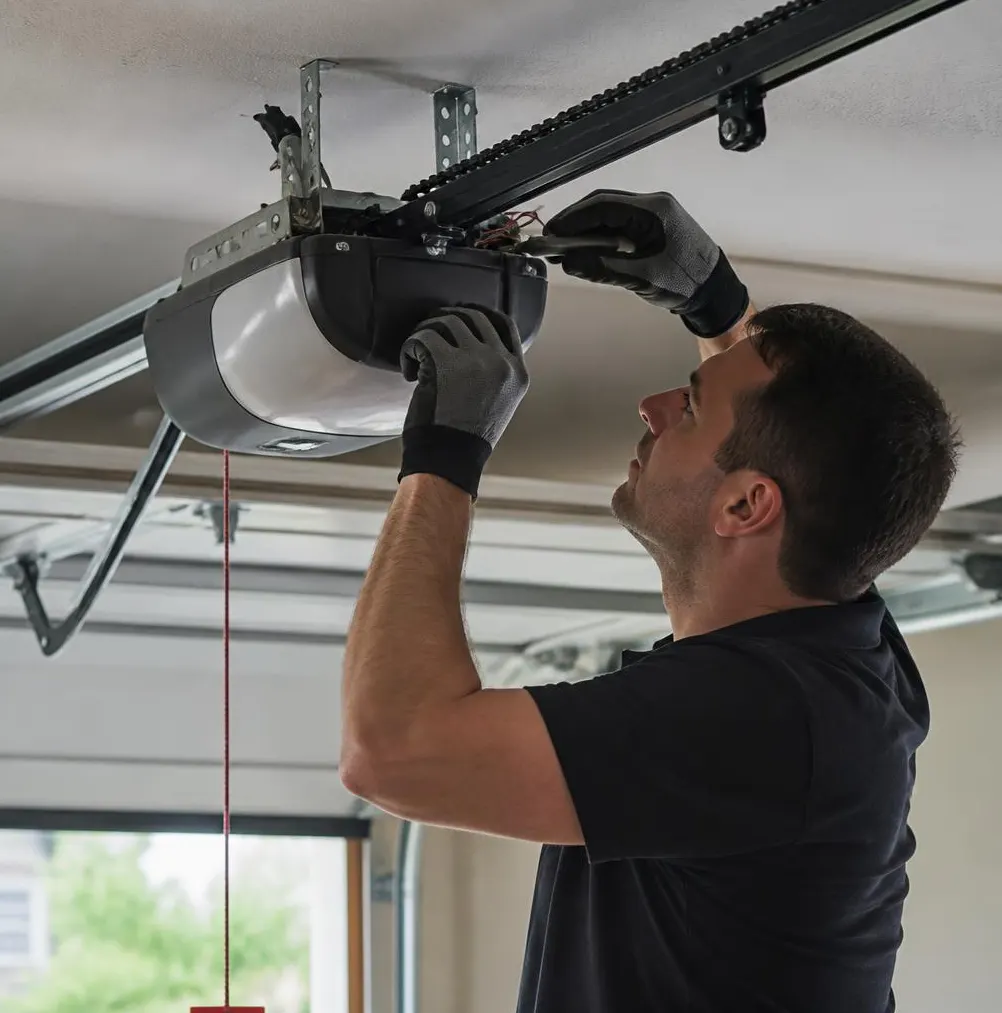
Garage door openers rely on a backup battery for power outages, which are common during nor'easters when tree limbs take down lines. Test the battery backup now, not during the storm. Also check the safety sensors near the floor on each side of the door—road salt residue and winter grime can coat the sensor eyes and cause the door to refuse to close or reverse unexpectedly. A quick wipe-down with a dry cloth usually solves it, but if the sensors are misaligned from a bump or a settling track, that's worth having looked at before you're relying on the door to seal up a cold garage.
Older Doors Need a Closer Look
A lot of homes in this area still have original garage doors and hardware, sometimes decades old. These doors often lack modern insulation, which matters if the garage shares a wall with living space or is used as a workshop. They may also have older spring systems that weren't built for today's lifting loads if a heavier door or opener was added over the years. If your door is original to the house, a pre-winter inspection is worth the time even if nothing seems obviously wrong—small issues like worn cables or pitted springs are much easier to catch in October than during an ice storm in February.
When to Call Woodbury Garage Door
If your balance test fails, if you're hearing grinding or popping sounds from the spring area, or if the door is sticking partway through its cycle, that's the point to call in a professional rather than keep adjusting things yourself. Woodbury Garage Door handles spring replacement and garage door maintenance visits that cover exactly this kind of pre-winter tune-up—lubrication, track alignment, balance adjustment, and a check of the opener's safety features—so you're not dealing with a failed spring or a frozen track in the middle of a storm.
If you're in Woodbury, Southbury, Middlebury, Watertown, Bethlehem, Roxbury, Washington, or Thomaston and want your garage door checked before winter sets in, call Woodbury Garage Door today to schedule a pre-winter inspection.